

An upgrade is a promise about the next action
A customer buys a larger plan because the next project will not fit. The payment screen says the change succeeded, but the application still refuses to create it. From the customer's perspective, the plan is not delivered until that next action works under the promised conditions.
Define SaaS entitlements as the product capabilities and limits an account may use at a particular time. They answer a different question from the user's role: the account may own a premium capability while a particular member still lacks permission to use it. Both decisions must hold for an action to proceed.
This brief proposes a fictional product with Basic and Pro plans. Basic permits three projects. Pro permits ten and adds premium automation. The numbers are assigned requirements for the example, not pricing advice or observed customer demand. The useful result is a policy matrix and an acceptance worksheet that a product and engineering team can adapt.
The proposed upgrade becomes usable only after the chosen confirmation condition is satisfied and the new entitlement revision is effective. A scheduled downgrade changes capacity at its effective time. Existing work receives its own rule. Combining those decisions into a single paid/unpaid flag would leave the customer promise underspecified.
Specify the transition before mapping statuses
Write the product rule first, then map the billing provider's events and state into that rule. A provider's subscription status is useful evidence, but its meaning may not equal the product's access decision.
Stripe's subscription lifecycle documentation separates subscription, invoice and payment state. It explains that an active subscription does not mean every outstanding invoice has been paid, and that delayed-confirmation payment methods can produce a different lifecycle. Therefore, a team requiring payment confirmation for a capability needs to identify the relevant evidence rather than assuming that one status proves it.
Here is the proposed policy. T is the scheduled downgrade instant. G is the end of an explicitly granted renewal grace period. Those symbols are effective instants, not hard-coded delays. The business must choose their values and the customer's displayed time zone before implementation.
| Account situation | Effective capacity | New premium automation |
|---|---|---|
| Basic, no pending change | 3 projects | Unavailable |
| Upgrade awaiting confirmation | Basic remains: 3 | Unavailable |
| Upgrade confirmed and effective | Pro: 10 | Available to permitted users |
| Downgrade scheduled, before T | Pro remains: 10 | Available until T |
| Downgrade effective, at or after T | Basic: 3 | No new starts |
| Renewal grace, before G | Current Pro: 10 | Available during grace |
| Grace expired, at or after G | Existing-work read access | No new starts |
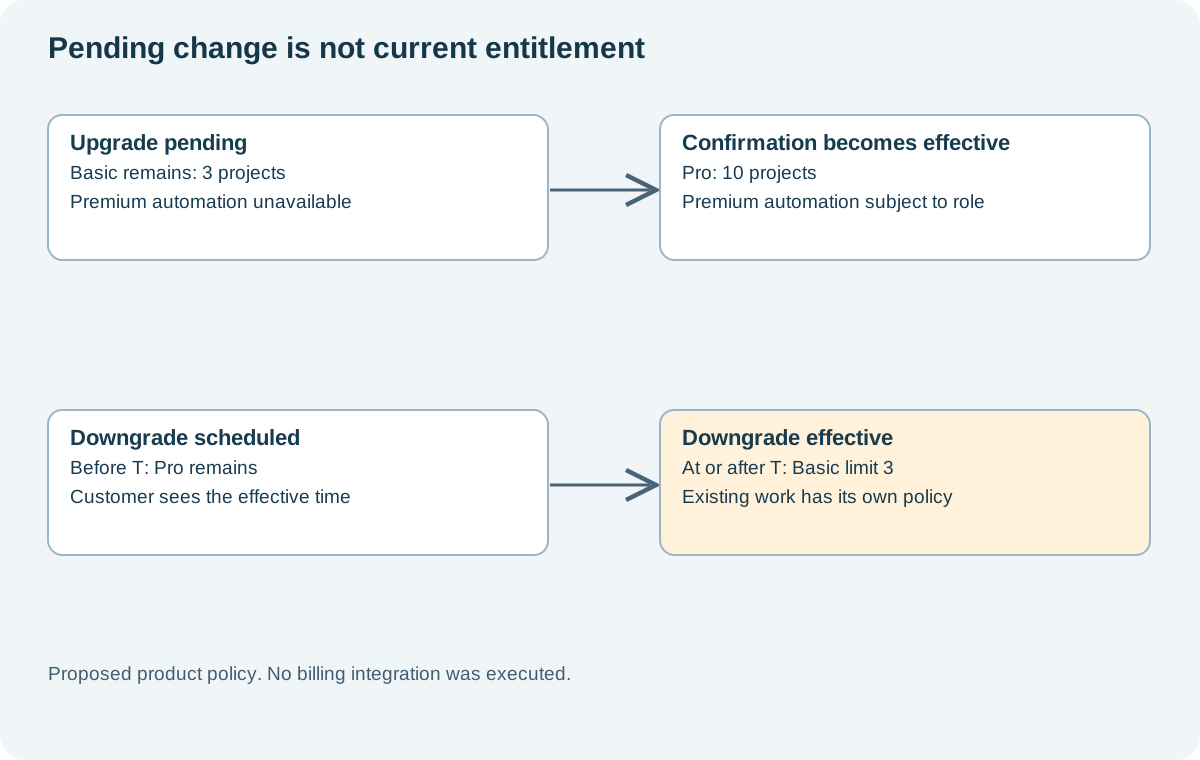
The grace policy is an editorial proposal for this fictional product. Some products will choose a narrower grace experience or no grace period. The acceptance brief must state which decision applies, why the affected workflow can tolerate it and who may authorize an exception. A support agent should not have to infer the policy from an unexplained error message.
Decide what happens to existing work
Suppose the account has five projects when the downgrade becomes effective. The new limit is three. In this proposal, all five remain readable and no new project may be created until the active count is below three. The downgrade does not select two projects for deletion.
The team still needs to define what counts as an active project. If archiving frees capacity, specify whether restoration consumes it again. Enforce that rule at the operation that changes the count, including concurrent creation and restoration. A quota shown in the interface is a preview, not the enforcement point.
Premium automation already accepted before T is allowed to finish under the entitlement revision captured at acceptance in this example. New starts at or after T are refused. Ongoing user authorization, explicit security revocation and cancellation remain separate controls. A recorded plan entitlement cannot override them.
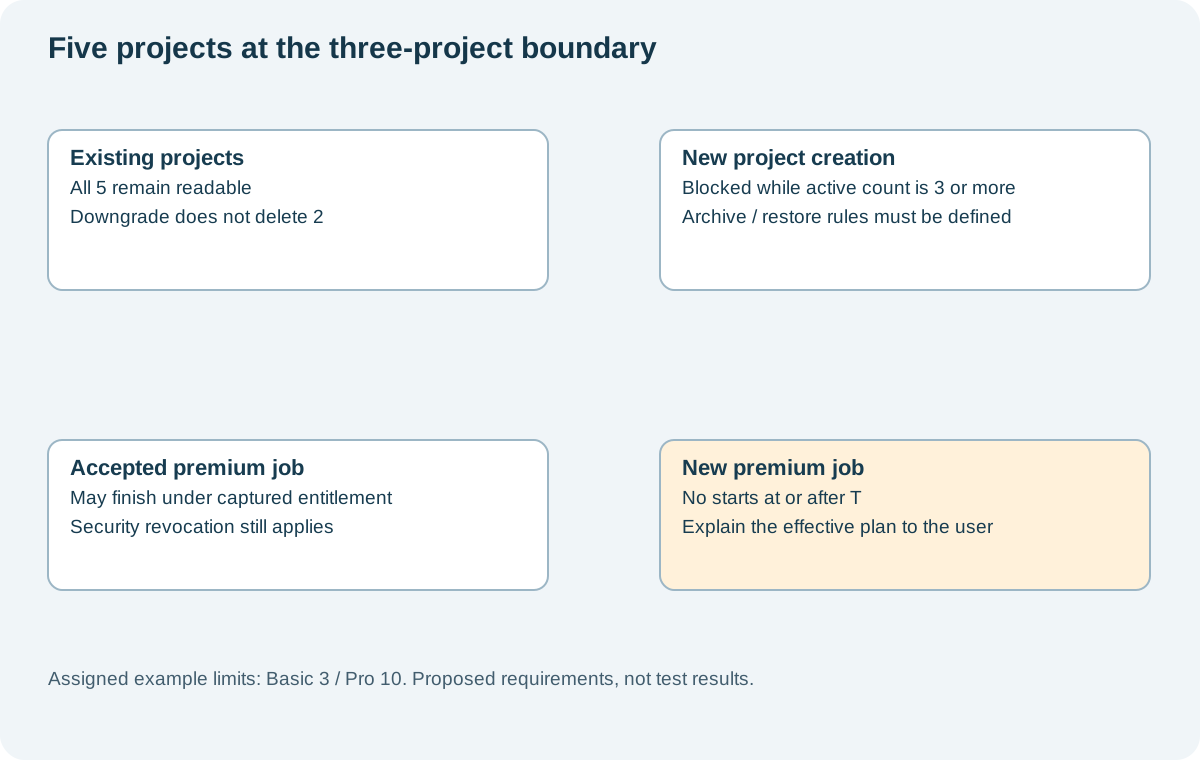
That distinction affects cost and customer communication. Letting an accepted job finish may consume resources after the plan changes. Stopping it may leave partial work that needs recovery. Choose the rule for the actual operation, include its consequence in scope and show the customer what will happen before accepting the downgrade.
Existing-data access, data retention and account closure should have separate requirements. Plan changes do not automatically establish a deletion policy. The account export and closure brief covers the handoff when a customer leaves. Use it when the requested transition actually includes closure.
Deliver the same decision to every surface
The web interface, API and job admission path should consult a consistent entitlement decision for the same account, action and effective instant. The interface can explain the result, while server-side enforcement controls the operation. If a stale page still shows a premium button after T, the action should receive an understandable refusal and a refreshed state.
Give the decision a revision and record when it became effective. Keep pending changes distinct from current rights. A delayed provider notification must not overwrite a newer entitlement decision simply because it arrived later. Reconciliation needs an authoritative state comparison and an explicit rule for unresolved evidence. The webhook ordering article covers the delivery failure behind that requirement.
If an external team owns this integration, hand it the transition matrix together with the billing and account boundaries. Pharos Production's SaaS development with subscription billing and tenant controls describes billing integration, usage tracking and tenant feature controls, with billing reconciliation in its delivery process. Those service areas match the work here: connect the subscription change to the rights enforced inside the product. Confirm this specific acceptance scope with the proposed team. A service description is not evidence that the fictional policy has been implemented.
Avoid making every request depend on a synchronous billing-provider call. A locally maintained entitlement projection can support the application, but its freshness and failure behavior become part of the product contract. Decide what happens when a new upgrade is confirmed remotely and local reconciliation is temporarily unavailable. A clear pending state is more defensible than claiming the capability is ready before the product can enforce it.
Accept the behavior before launching the plan
The worksheet assigns a product owner to policy, an integration owner to the evidence mapping and an application owner to enforcement. QA needs observable outcomes at the effective boundary. Support needs the customer's current state and the reason a requested action is unavailable.
For the downgrade case, create five fictional projects on Pro, schedule T and inspect actions immediately before and at T. Before T, a permitted user may start premium automation. At T, a new start is refused, all five projects remain readable and the already accepted job follows its recorded policy. Archiving enough projects should allow creation only when the defined active-count rule permits it.
For the upgrade case, separate checkout completion from the chosen confirmation evidence. Verify the pending message, then verify the newly allowed action after the entitlement revision becomes effective. Repeat with a delayed or repeated provider notification and inspect the revision the application actually uses.
These are proposed acceptance cases, not executed billing tests. The downloadable matrix has been checked for complete rows and explicit boundary conditions. No subscription or payment was created. The implementation requirement should leave the meeting in concrete form: a named account action, its effective entitlement rule, its treatment of existing work and the evidence that demonstrates the promised outcome.
Sources
Documentation checked .